
In 2026, students who value their time use AI writing assistants to save many hours every week. Are you one of them? If not, consider it, especially if structuring or editing your work isn’t your biggest interest. Readers familiar with AI tools may already be aware of their potential. But this article will clarify which options offer the best value for students, based on features, pricing, and learning support. Here are 6 of the best AI writing assistants for students in 2026.
Our Best AI Writing Assistants at a Glance
Here’s a snapshot of our picks that shows key differences between them. It highlights their strengths, pricing structures, and academic quality side by side.
| Platform | What is it for? | Free Plan | Pricing (Base Plan) | Why consider? |
| Ryne AI | Academic writing + human-style output | Yes (quite limited) | Starting $19.99/mo | Strong academic tools, humanization, multi-model support |
| Grammarly | Grammar, style, tone refinement | Yes | Starting $12/mo | Grammar & plagiarism checks, suggested edits |
| QuillBot | Paraphrasing & summarizing | Yes | $19.95/mo (monthly), $13.32/mo (quarterly), or $8.33/mo (annual) | Paraphrasing modes, summarizer, citations |
| Jasper | Long-form content & templates | Trial | ~$59/mo | Strong marketing use, less academic focus |
| Writesonic | SEO & fast content drafts | Yes (quite limited) | Starting $39/mo (annual) | SEO integration & blog generation |
| ChatGPT | Conversational draft & idea support, quite flexible | Yes (best free option) | ~$20/mo (Plus) | Versatile drafting & brainstorming |
How Students Use AI Writing Assistants
The best AI writing assistants can help students across a range of tasks. These include brainstorming topics, outlining essays, correcting grammar, adjusting tone, and formatting citations. The modern student workflow often pairs multiple assistants to use each tool’s strengths. This strategy reduces time spent on revision and improves clarity and structure in writing.
As students move through different types of assignments, be it short responses to research papers, the ideal workflow shifts. Tools that excel at paraphrasing and summarizing help with research synthesis, while strong grammar and stylistic suggestion engines assist with polishing the final draft. Meanwhile, tools that generate ideas or emulate human-like prose help overcome writer’s block. All in all, these capabilities make AI writing assistants valuable in 2026’s educational landscape.
1. Ryne AI
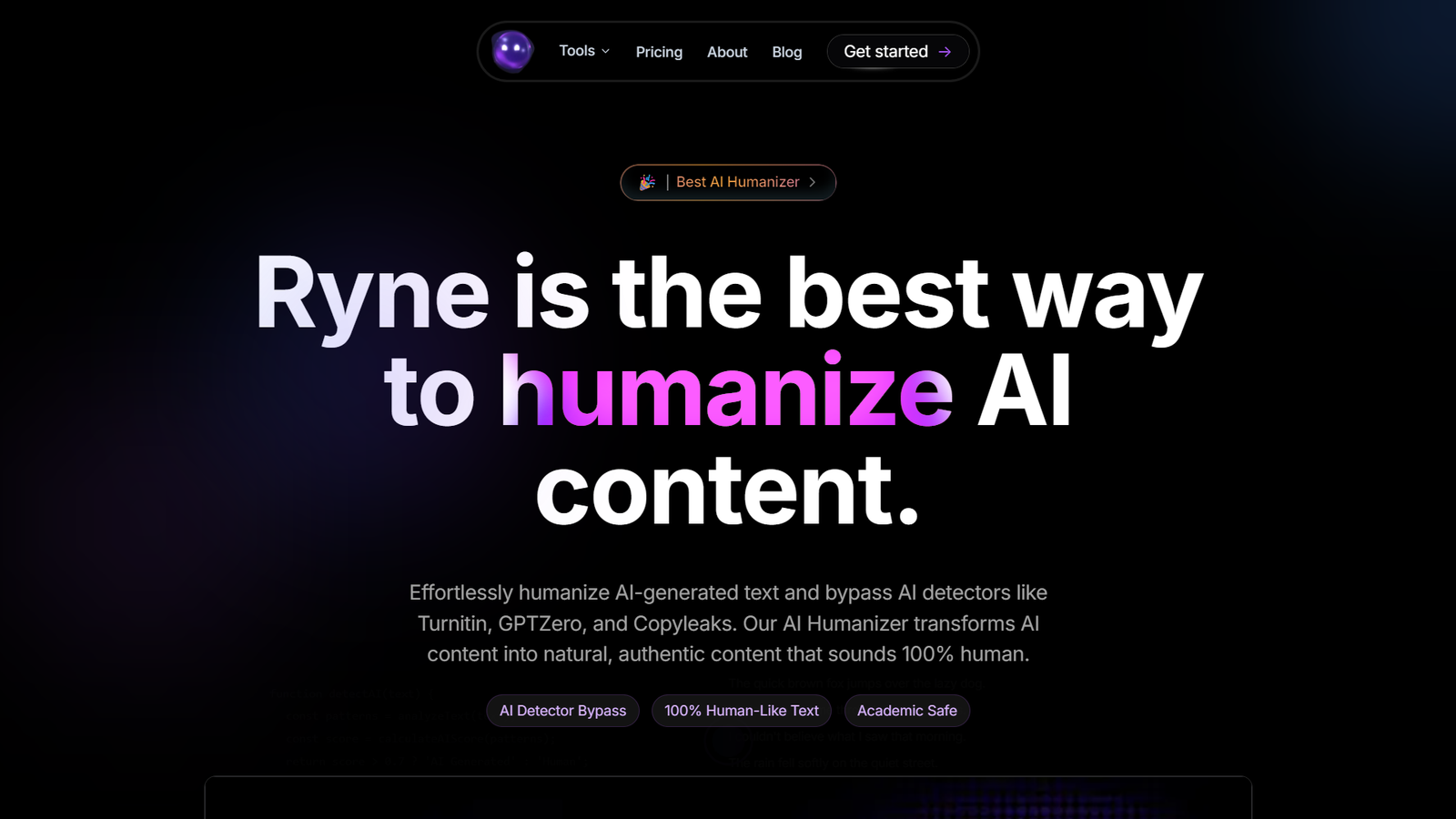
Ryne AI is a writing assistant designed with academic work in mind. It combines tools that go beyond simple drafting and editing. Users benefit from multi-model AI responses, meaning the tool can tap into different engines at once to create richer, more nuanced text. This unique feature suggests strengths not just in grammar and structure but in generating ideas and context-aware responses that match research expectations.
One standout aspect of Ryne AI is its Text Humanizer, which is engineered to make AI outputs sound more natural and avoid generic AI signatures. This can help students produce drafts that feel authentic and tailored to assignment requirements. The inclusion of note-taking tools, AI editors, and deep check reports further supports students as they progress from draft to revision.
Why Students Love It
In contexts where readability and natural tone matter, Ryne emphasizes making AI output sound human in essays and assignments, reducing awkward phrasing and unnatural repetition. This can be especially helpful when the goal is credible academic writing rather than robotic output.
Pros:
- Multi-model AI responses for richer output.
- Tools tailored for research tasks and academic writing flow.
- Humanizer feature improves essay tone and readability.
Cons:
- Premium pricing can be steeper than simpler tools.
- Not as strong in SEO or marketing content compared with specialized tools.
2. Grammarly
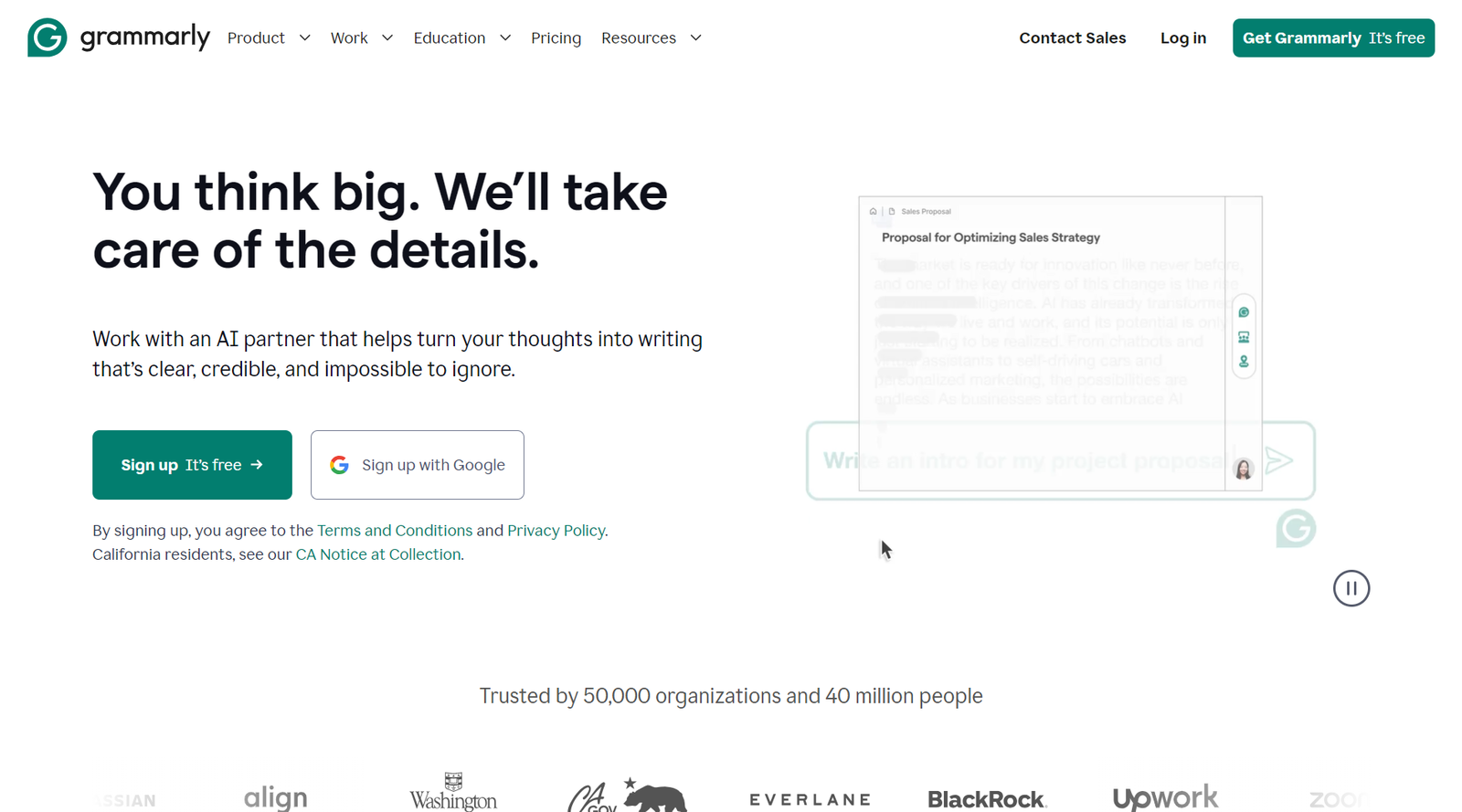
Grammarly has long been a trusted assistant for students looking to improve grammar, tone, and clarity. Its AI engine scans your text to correct spelling and punctuation and suggest exciting stylistic changes. Adding to this, Grammarly provides tone suggestions and a plagiarism detector, which helps students refine academic writing to meet citation expectations.
The tool’s generative AI features allow students to rewrite or expand sections without switching workflows, making it a favorite for polishing essays and emails. Although Grammarly doesn’t specialize in full-length content generation like some competitors, its strength lies in improving writing quality and readability across platforms such as Word processors, browsers, and document tools.
Why Students Love It
Grammarly helps students polish their writing by catching grammar, punctuation, and style errors that typical spellcheck tools miss. It also offers tone adjustment suggestions to ensure the writing matches the intended audience (like a teacher or peer reviewer).
Pros:
- Excellent grammar and style suggestions.
- Works across many writing platforms.
- Plagiarism detection helps maintain academic integrity.
Cons:
- Limited content drafting capabilities.
- Premium plan required for advanced features.
3. QuillBot
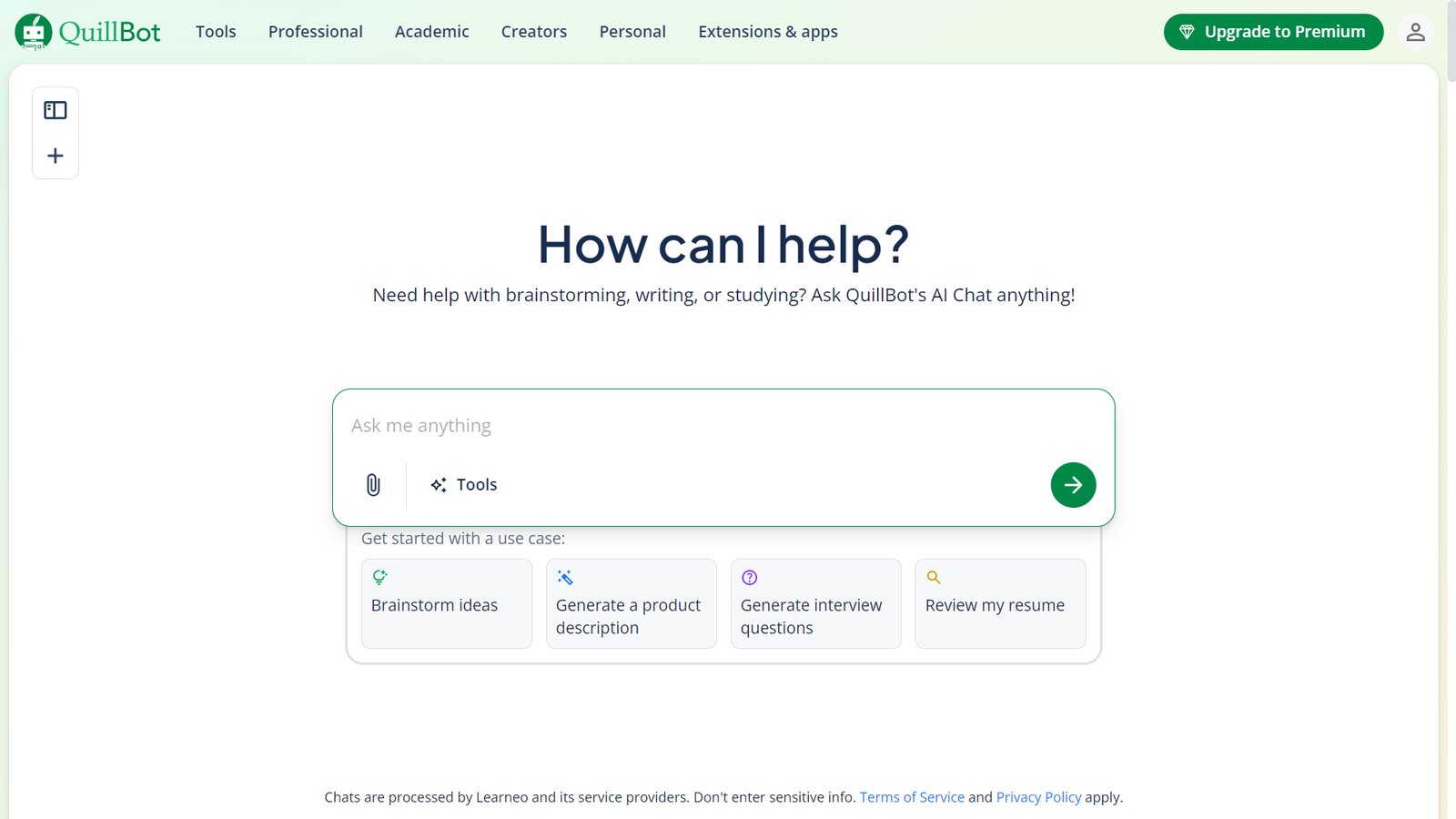
QuillBot began as a paraphrasing tool that helped users reword sentences while preserving meaning. Over time, it has expanded to include summarization, citation tools, and writing flow features. These additions make it especially helpful for research-heavy assignments where synthesizing sources accurately and ethically matters.
QuillBot’s paraphrasing modes let students choose styles (such as formal, simple, or creative), helping content align with assignment requisites. Additional features like summarizers can condense long academic articles into digestible points, saving time during research.
Why Students Love It
Students often need to rewrite research notes or avoid repetitive phrasing while preserving meaning. QuillBot’s paraphrasing modes help with restatement, summarized abstracts, and citation phrasing without losing the original idea.
Pros:
- Flexible paraphrasing and writing modes.
- Helps with research summarization.
- Affordable premium plan.
Cons:
- Not a full content generator.
- Paraphrasing can occasionally alter nuance.
4. Jasper
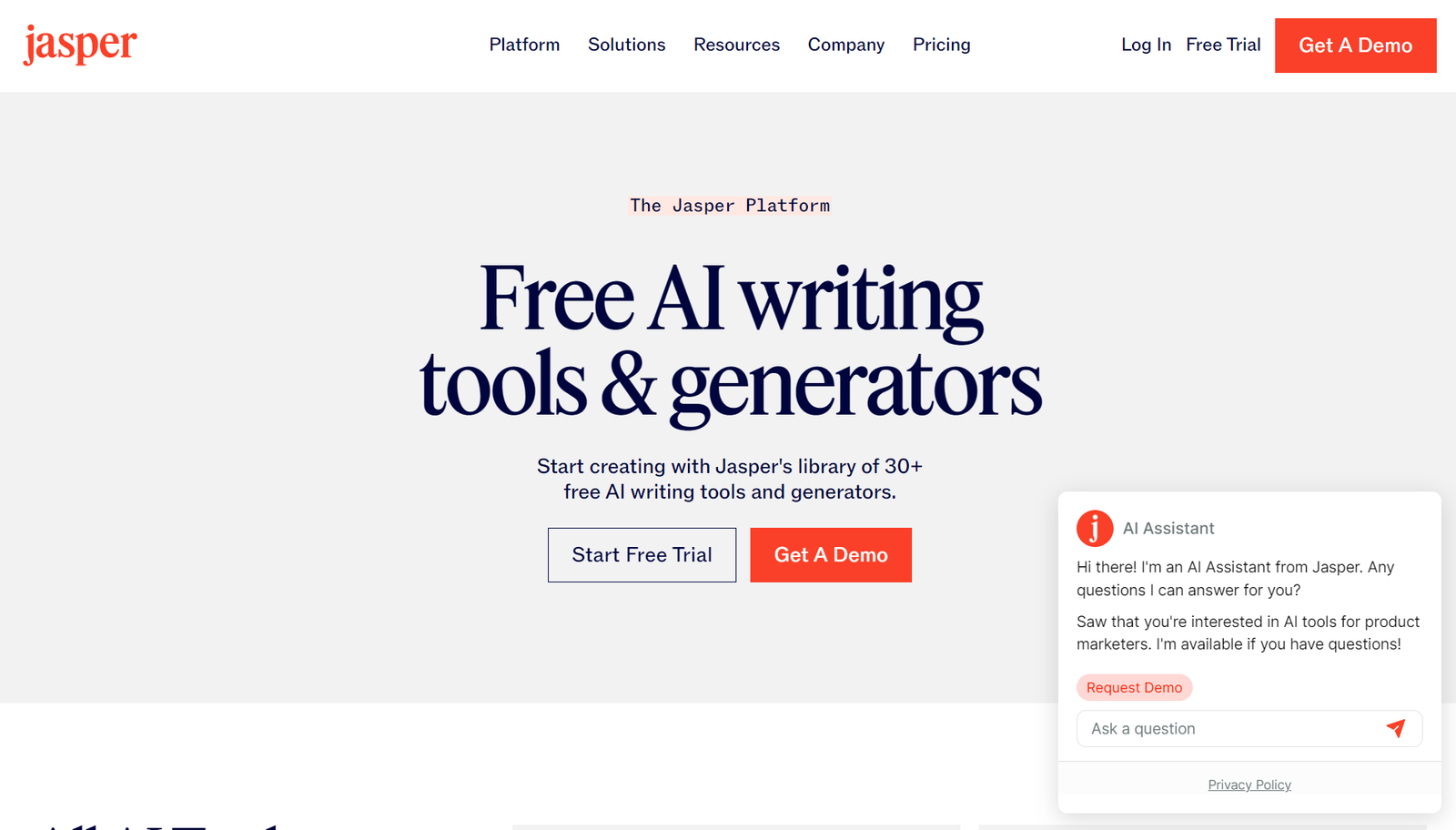
Jasper excels at long-form content, making it a popular choice for students producing essays, reports, or extended assignments that require structured sections and tone continuity over many paragraphs. Its rich library of templates enables users to generate introductions, conclusions, and topic-specific content without rewriting from scratch.
The Brand Voice feature allows users to maintain a consistent writing tone, which is especially helpful in assignments with stringent style guidelines. Jasper is capable of producing drafts quickly but is generally considered more marketing-focused and less tailored to academic nuance than tools like Grammarly or QuillBot.
Why Students Love It
While originally geared toward marketers, students who need long essays, structured research papers, or multi-section reports benefit from Jasper’s ability to maintain consistent tone and style over long content bodies.
Pros:
- Strong long-form content generation.
- Extensive template library for various content types.
Cons:
- Less specialized for students than other tools.
- Higher pricing tier.
5. Writesonic

Writesonic is a versatile writing assistant that leans into fast content production and integration with SEO frameworks. Its Chatsonic AI feature pulls in up-to-date information, helping with assignments requiring current data or context — an invaluable feature for research work.
The tool also includes templates for posts, SEO-optimized blog drafts, and export features for content management systems. While geared more toward digital publishing, Writesonic’s adaptability is useful for students juggling content creation and publication tasks (like online portfolios or blogs related to coursework).
Why Students Love It
Even though SEO might seem business-oriented, the features that help organize content logically also benefit academic writing. Writesonic produces drafts with clear structure and topic transitions that students can refine.
Pros:
- Quick draft generation with SEO tools included.
- Integrated templates cover diverse tasks.
Cons:
- Not specifically built for academic writing.
- Can feel formulaic for complex assignments.
6. ChatGPT
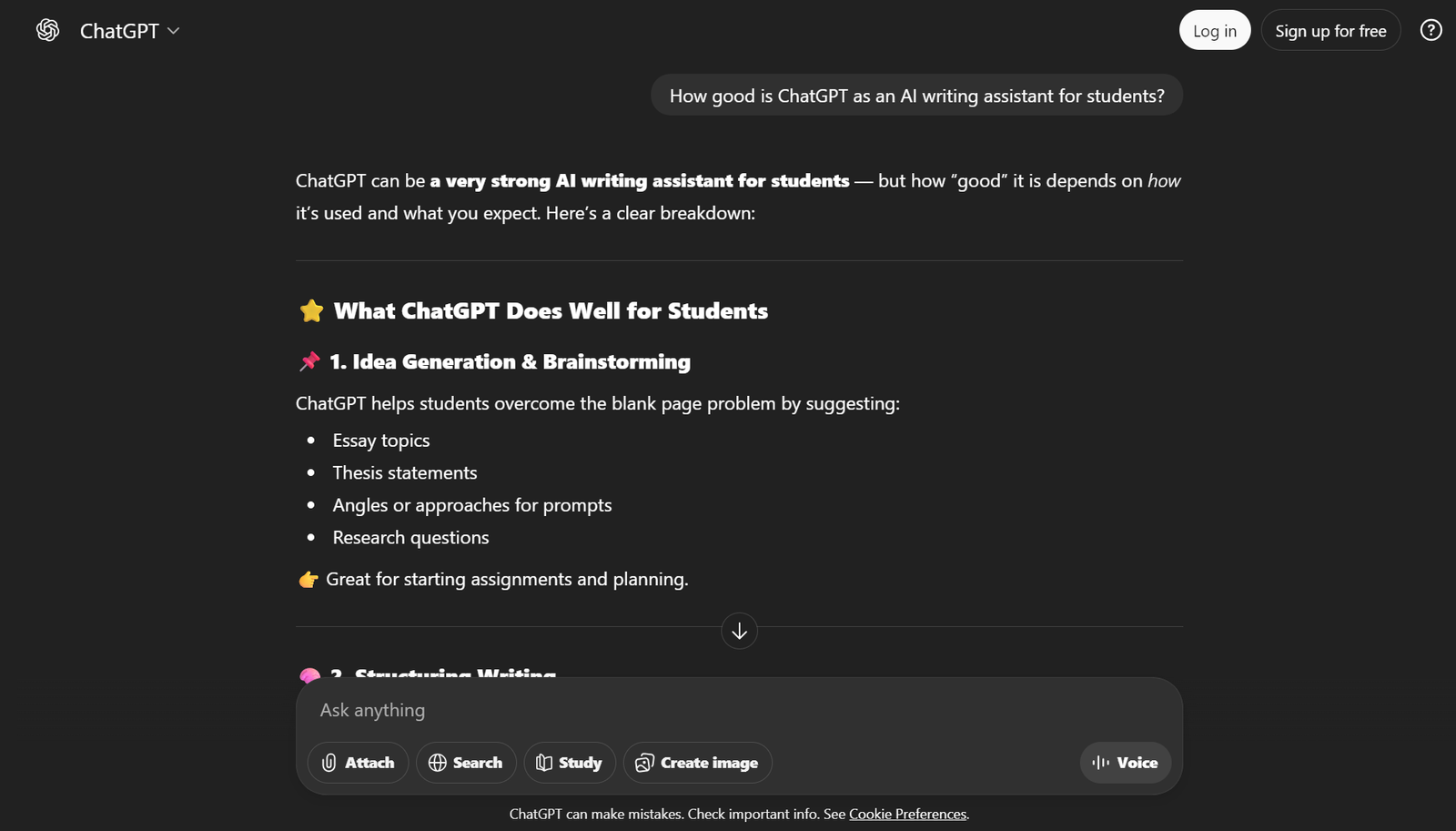
And of course, the good old ChatGPT remains one of the most flexible and broadly used AI writing assistants because it responds conversationally to writing prompts. Students use it to brainstorm topics, generate rough drafts, and structure arguments before refining them in specialized tools.
Unlike tools strictly focused on polishing or paraphrasing, ChatGPT’s strength lies in generating ideas, outlines, and draft text from scratch. It also handles creative tasks and can assist with examples, explanations, or contextual definitions. GPT-5 and its variants are impressive.
Why Students Love It
Because ChatGPT is powered by an LLM, it can do pretty much anything. Students can ask it to explain concepts in simple terms, format arguments, and suggest improvements to tone or structure. This versatility makes it popular with students in humanities and technical disciplines alike.
Pros:
- Extremely versatile for drafting and brainstorming.
- Supports multiple use cases, including research explanation and content draft.
Cons:
- Drafts may require additional refinement.
- Less focused on academic editing.
Tips for Students Choosing AI Writing Assistants
Here are practical tips to help students pick and combine tools for the best results:
- Match tools to task type: Use ChatGPT for idea generation, Grammarly for correction, and QuillBot for paraphrasing to create a streamlined workflow.
- Take advantage of free tiers: Most tools offer freemium access that is sufficient for basic writing tasks, allowing students to test features before upgrading.
- Balance quality with budget: Premium plans add value, but pairing ChatGPT Plus with Grammarly Premium often delivers strong performance for under $40/mo.
- Edit AI drafts thoroughly: Even the best AI outputs require a final human review for accuracy and assignment alignment.
Wrapping Up
Finding the best AI writing assistant for students in 2026 requires moving past one-size-fits-all solutions to select tools based on specific academic demands. While ChatGPT remains the superior choice for all-around brainstorming, specialized platforms like Ryne AI provide the essential human touch to ensure your work stays authentic and bypasses detection. Grammarly and QuillBot dominate the market for refining prose and managing citations, while Jasper and Writesonic deliver the raw power and real-time data required for complex assignments. So the options are plenty.
And besides, you must use these tools to sharpen your own critical thinking rather than using them as a substitute for it. Mastering these assistants responsibly is the only way to secure top grades and achieve the AI literacy now mandatory in the professional world.