
Emergent AI and Lovable are two of the most beloved AI websites and application builders in 2026. Both are for non-technical builders. Both use AI agents to handle the heavy lifting. But they’ve grown in meaningfully different directions. Lovable hit $300 million in ARR in under 12 months after launch and reached a $6.6 billion valuation following its December 2025 Series B. Emergent is still climbing, but hasn’t disclosed comparable revenue figures publicly. That gap in scale shapes what each platform can offer you, and it’s worth understanding before committing to any one. Let’s break down the differences between them in this focused Emergent AI vs Lovable comparison.
Let’s Understand What Lovable Does
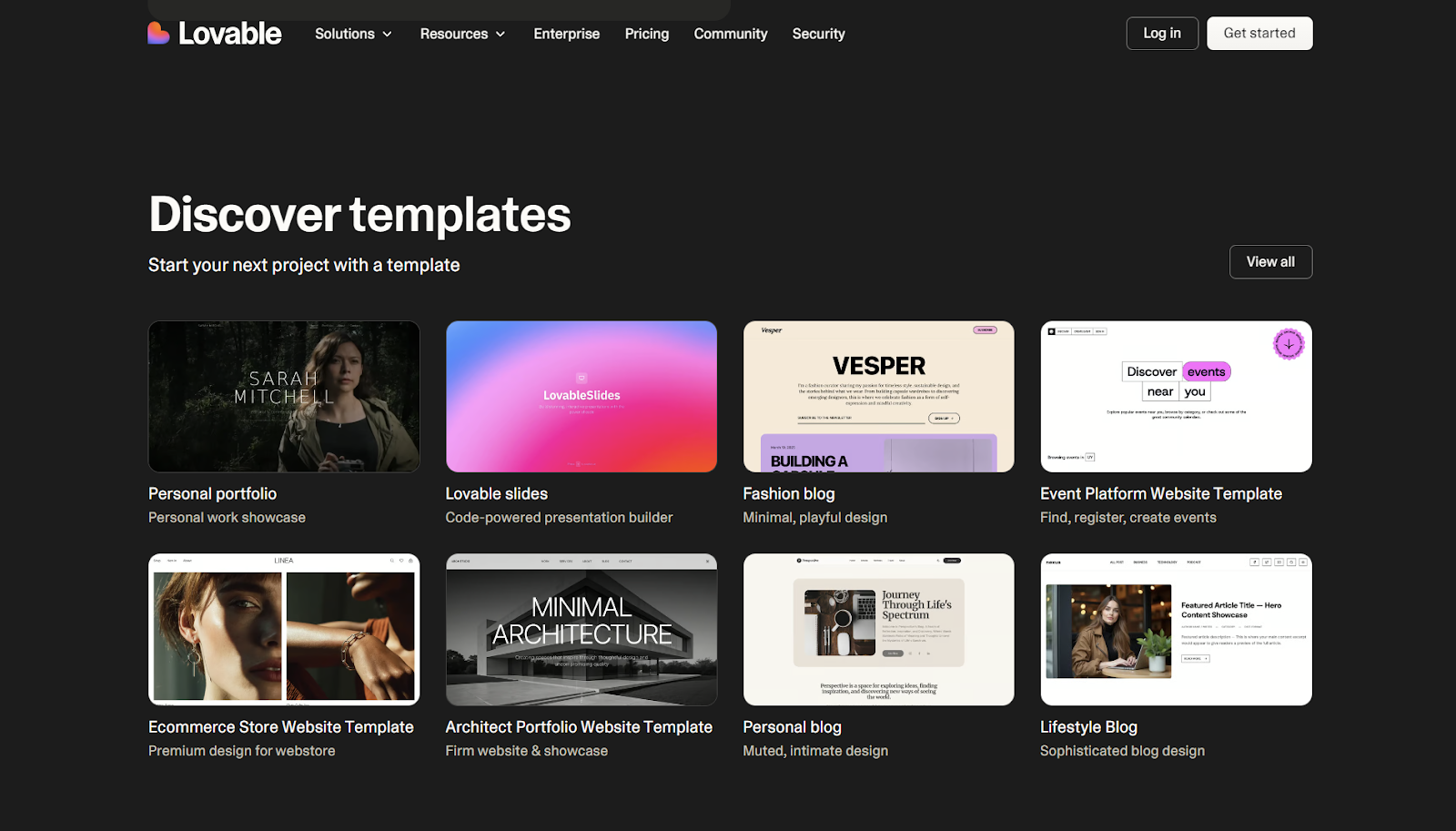
Lovable, originally released as GPT Engineer, rebranded in late 2024 to signal a shift away from developer tooling toward a broader audience. The premise is simple: describe an app in plain English, and Lovable generates the full codebase, deploys it, and handles the hosting. The output is always a React application backed by Supabase, styled with Tailwind CSS and shadcn/ui components. That’s the entire stack, every time, no exceptions.
The platform reached 2.3 million active users and generated more than 10 million projects since launch. That userbase is primarily composed of founders, product managers, and non-technical builders who need to move fast. A basic landing page or CRUD app can be live in under 30 minutes. More complex applications, like a SaaS dashboard with authentication and Stripe billing, reportedly take around four hours to build.
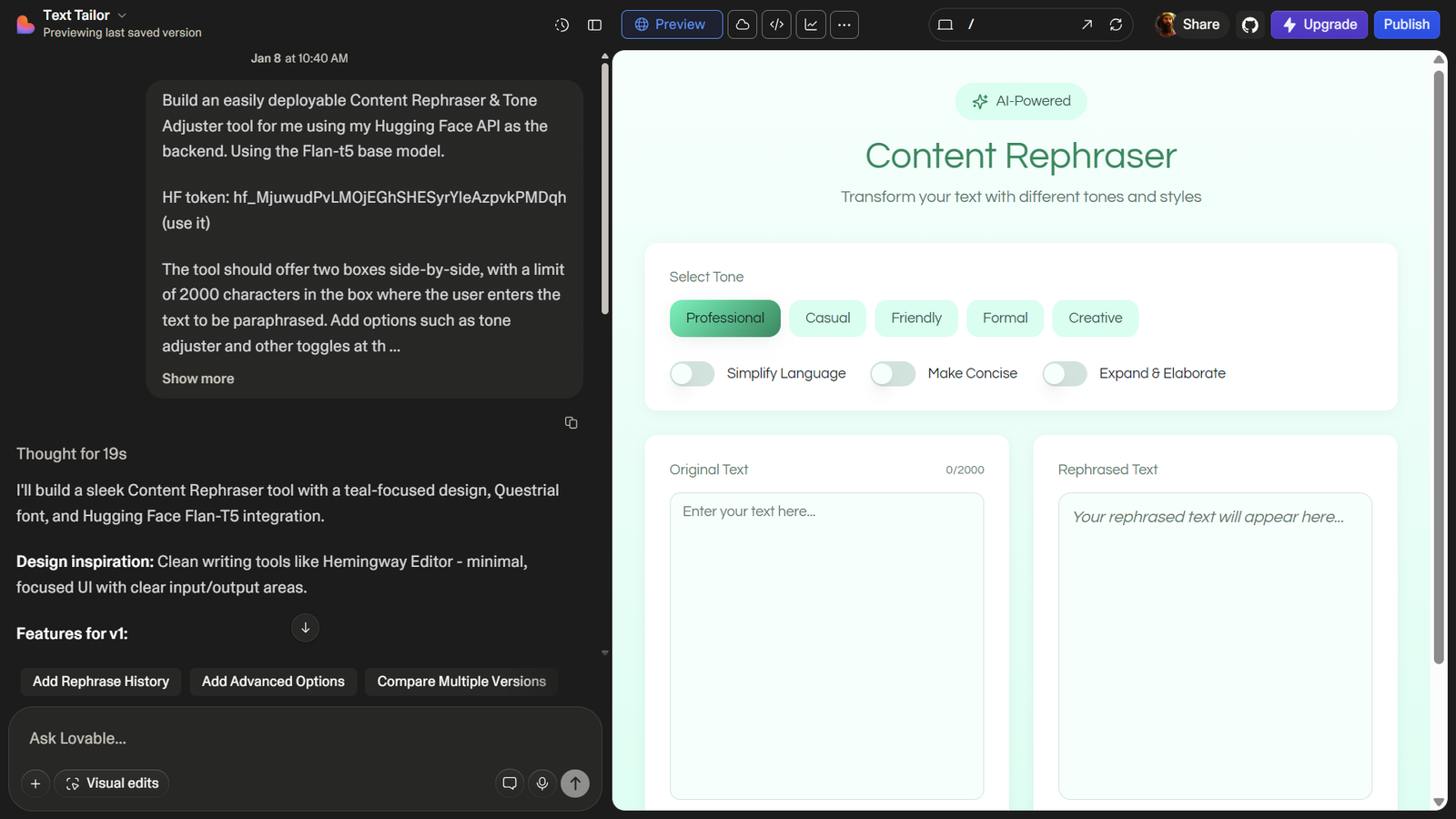
Lovable 2.0, released in 2025, addressed several long-standing criticisms. The update added real-time multi-user collaboration for up to 20 users, a Chat Mode Agent for reasoning through architecture decisions without touching code, a visual editor for CSS-level changes without prompting, and automated vulnerability scanning before deployment. The vulnerability scanning addition was notable.
An April 2025 report by Guardio Labs identified a critical security flaw in the platform’s generation behavior, where the AI could produce convincing phishing site clones from basic prompts. A separate incident in February 2026 saw a researcher find 16 vulnerabilities in a single Lovable-hosted app that exposed data from over 18,000 users. The 2.0 update was partly a direct response to those findings.
All code generated on the platform is exportable to GitHub. You own it, you can modify it in any editor, and you can host it anywhere. That’s a genuine advantage over closed platforms that lock you into their ecosystem.
And What Emergent Does
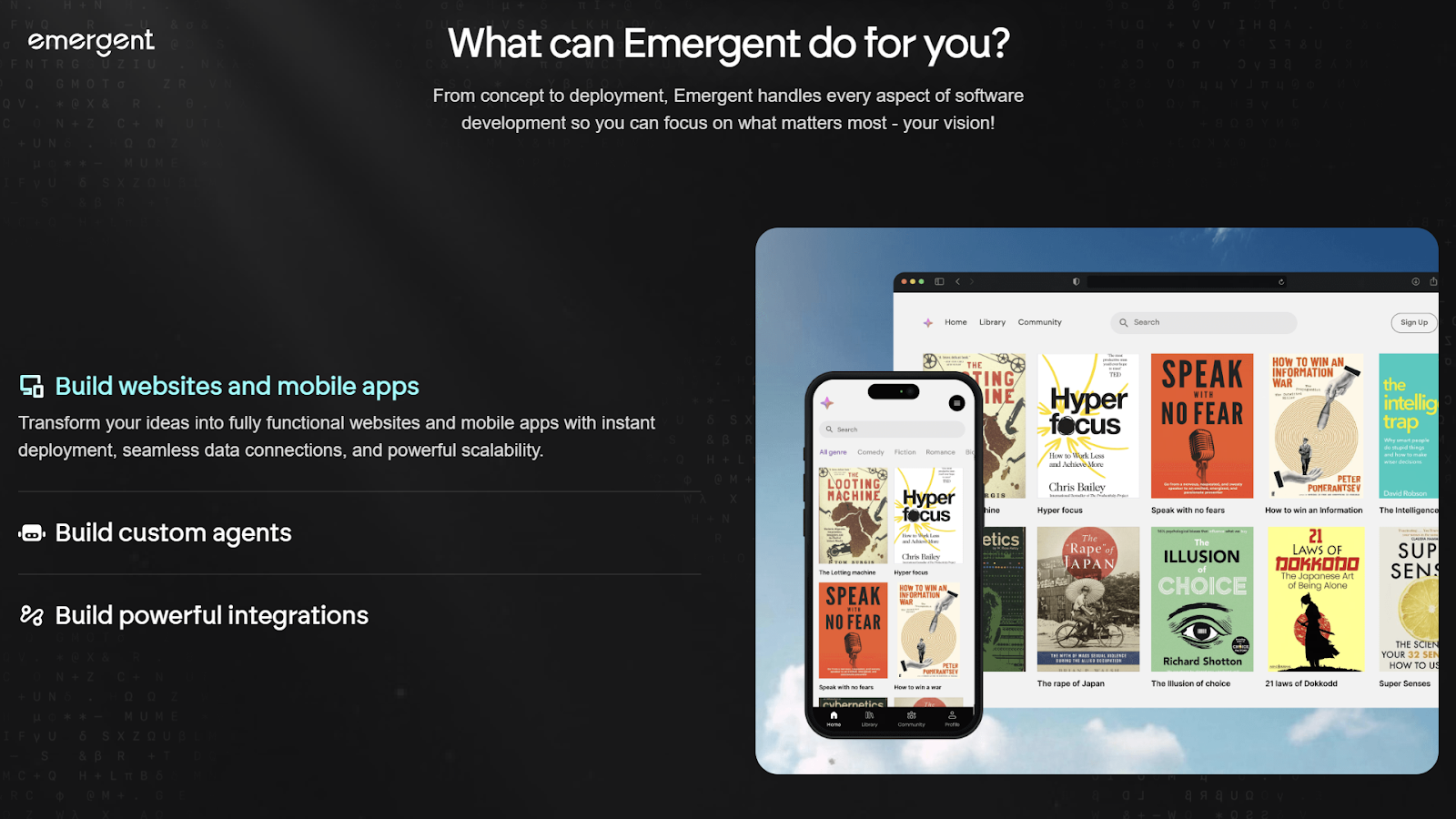
Emergent AI is a multi-agent development platform backed by Y Combinator, founded by engineers who previously worked at Google, Amazon, and Dropbox. Unlike Lovable’s single-agent generation model, Emergent runs a coordinated pipeline of specialized agents. A Planner agent interprets and breaks down your prompt. A Coder agent writes the implementation. A Tester agent validates the build. A Deployment agent publishes the finished product to managed hosting.
This architecture means the platform doesn’t just generate code and hand it to you. It attempts to simulate a development team. When bugs surface during a build, the agents are designed to detect, debug, and fix them without your intervention. Emergent calls this self-healing code, and it’s the feature that most distinguishes it from Lovable’s more passive output model.
The platform supports both web and mobile application development, which is a concrete advantage over Lovable’s web-only output. Integrations include GitHub, Supabase, Google Sheets, and Stripe. Apps deploy to managed hosting with automatic SSL and custom domain support, and the 1 million token context window available on the Pro plan enables more sophisticated, complex projects than most competing tools can handle at that price.
Emergent is best understood as a tool for people who want to describe a product and receive a deployed product. The tradeoff is cost predictability. Deploying a single app consumes 50 credits per month, which equals half of the Standard plan’s entire allocation. Complex builds with debugging loops can burn through credits rapidly, and the platform’s credit system has confused a significant share of new users.
Emergent AI vs Lovable – Direct Comparison
These two tools overlap on the basics but diverge sharply on architecture, output format, and control.
Lovable
- React + Vite + Tailwind + shadcn/ui output, no other frameworks supported
- Visual editor for direct CSS-level changes without prompting
- Real-time multi-user collaboration for up to 20 users (added in 2.0)
- Supabase backend with authentication, storage, and PostgreSQL database
- Chat Mode Agent for reasoning and debugging without code edits
- Dev Mode for in-platform direct code access
- Automated vulnerability scanning before deployment
- GitHub sync with full code export and ownership
- One-click deployment to custom domains or external hosts like Vercel and Netlify
- Web only, no native iOS or Android output
Emergent AI
- Multi-agent pipeline: Planner, Coder, Tester, and Deployment agents run in sequence
- Supports both web and mobile application output
- Self-healing builds: agents detect and fix runtime errors during generation.
- 1 million token context window on Pro tier for large or complex projects
- GitHub integration for code export and version control
- Managed hosting with automatic SSL, custom domains, and infrastructure handling
- Integrations with Supabase, Google Sheets, and Stripe
- Import an existing GitHub repository to extend or refactor it.
- Designed for single-user workflows; no real-time multi-user collaboration.
Emergent AI vs Lovable: Pricing Comparison
Pricing matters. Here’s how much these platforms will cost you:
| </> | Lovable | Emergent AI |
| Free Tier | 5 credits/day, 30/month; unlimited public projects | 10 credits/month; sandbox only |
| Entry Plan | $25/month (Starter, 100 credits) | $20/month (Standard, 100 credits, billed annually) |
| Mid Tier | $50/month (Business, 500 credits) | No direct mid-tier |
| Power Tier | Custom pricing (Enterprise, 1,500+ credits) | $200/month (Pro, 750 credits, 1M context) |
| Team Plan | Enterprise; custom pricing with SSO | Custom Pricing (Team, collaboration, 750+ credits) |
| Hosting | Included; built-in deployment | Included; 50 credits/month per deployed app |
| Code Ownership | Yes, full GitHub export | Yes, full GitHub export |
| Mobile Output | No | Yes |
Lovable’s credit efficiency is notably better at equivalent price points. The $50/month Business plan gives you 500 credits versus Emergent’s 750 credits at $200/month. But Emergent’s self-healing agents may reduce the number of credits consumed per successful build, since fewer manual correction cycles are needed. The real comparison isn’t credits-per-dollar; it’s successful builds per dollar.
Where Each Tool Wins
Understanding the specific strengths of each platform helps you avoid wasting money on the wrong one.
Lovable’s advantages:
- Better visual output from the first generation, particularly for design-forward applications
- More credit-efficient at comparable price points
- Lovable 2.0 makes iteration faster with the visual editor and Chat Mode Agent.
- Stronger community support and documentation from a significantly larger user base
- Better suited to founders who want polished, investor-ready UI out of the box
- Monthly credits partially roll over, reducing waste from quieter weeks.
Emergent’s advantages:
- Self-healing agents reduce the back-and-forth that burns credits on debugging in Lovable.
- Mobile app output gives Emergent a use case Lovable can’t touch.
- The multi-agent architecture handles more complex specifications without degrading.
- Better suited to building full business logic applications, not just frontend-heavy prototypes
- The 1M token context window handles large projects more reliably than Lovable’s context limits.
- Importing an existing GitHub repo to extend it is genuinely useful for teams with legacy code.
Where Each Tool Falls Short
Neither platform is ready to replace professional developers on production-critical systems, and both have documented failure modes.
Lovable’s weaknesses:
- The debugging loop problem is real and well-documented; users report burning 60 to 150 credits on layout issues and AI-introduced bugs.
- Security concerns remain active after the 2025 VibeScamming findings and the February 2026 data exposure incident.
- Locked to React; if you need Vue, Svelte, or anything mobile, Lovable is the wrong tool.
- AI-generated apps are generally considered a “60 to 70% solution” by experienced users rather than production-ready code.
- Complex business logic, multi-step flows, and custom third-party integrations require manual coding beyond the platform.
Emergent’s weaknesses:
- Credit drain is unpredictable, and more than 50% of new users have historically chosen the wrong plan for their usage level.
- Deploying a single app consumes 50 credits per month, burning through the Standard plan quickly if you run multiple projects.
- No real-time multi-user collaboration, which limits its usefulness for team environments
- Mobile output quality still lags behind dedicated mobile-first tools.
- The platform is younger and has a smaller community than Lovable, meaning fewer tutorials and fewer community-built solutions to common problems.
Emergent or Lovable – Which One Should You Pick?
The clearest way to choose between these two platforms is to start with the type of app you’re building and who’s building it.
Lovable is the better pick if your priority is a polished web application with strong visual design, and you want to iterate on it repeatedly. Its visual editor and 2.0 updates make it faster to refine than anything Emergent currently offers for web projects. Founders building a demo, a waitlist page, or an early SaaS product for investor review will find that Lovable produces more impressive results from the first generation.
Emergent is the better pick if you’re building something with meaningful backend complexity, need mobile support, or want to minimize manual debugging time. The multi-agent pipeline is genuinely better at catching its own errors than Lovable’s single-agent approach. If you’re importing a GitHub repository to extend existing code or building a product that will need ongoing iteration across web and mobile simultaneously, Emergent has the architecture to support it.
For prototyping velocity alone, Lovable is hard to beat at $20 per month. For deployment ambitions that go beyond React web apps, Emergent is the more capable choice.
FAQ
1. Lovable vs Emergent AI: What’s the difference?
The main difference between Emergent AI and Lovable is how they build apps. Emergent AI focuses on automatically generating full-stack applications (frontend, backend, database, and APIs) from a prompt, while Lovable focuses more on UI generation, visual editing, and faster design iteration.
2. Which AI app builder is faster: Emergent AI or Lovable?
Lovable is typically faster for generating apps. In many tests, Lovable can create production-ready apps in about 8–12 minutes, while Emergent AI may take 45–60 minutes because it builds a more complete architecture.
3. Is Lovable or Emergent AI better for beginners?
Lovable is usually better for beginners because it includes a visual editor and easier UI customization, making it simpler for non-technical founders to create prototypes quickly. Emergent AI may feel more technical since it focuses on full-stack automation.
4. Which AI tool is better for building startup MVPs?
Emergent AI is often better for building functional MVPs with backend logic and databases, while Lovable is ideal for design-focused prototypes or quick product demos with polished UI.
5. Is Emergent AI cheaper than Lovable in 2026?
Emergent AI can be cheaper for solo developers because it offers predictable credit-based pricing (around $20/month for 100 credits). Lovable costs slightly more but allows shared credits across unlimited team members, which can be more cost-effective for teams.
Wrapping Up
Let’s keep things simple. Lovable = Speed. Emergent = Depth.
Lovable is built for fast web prototyping. It has a big user base, generates clean UI quickly, and is easier on credits, making it the go-to for non-technical builders. Emergent AI aims higher. It handles deeper architecture, supports mobile, and uses agent workflows, but it costs more and has a smaller community.
Lovable is still recovering from last year’s security issues, which matters if you’re handling real user data. Both tools give you full code ownership, so you’re not locked in.
Pick Lovable for quick web builds. Choose Emergent when the project gets more complex.